More of a curiosity than numismatic related…..
Internet resource – http://chipster.net/IllegalGuideV4.pdf
More of a curiosity than numismatic related…..
Internet resource – http://chipster.net/IllegalGuideV4.pdf
Just returned from a business trip/mini vacation in California. Spent the last 7 days in the Los Angeles area. Had to stop by the Hawaiian eateries. Portuguese sausage, eggs, and rice breakfast was onolicious. Nothing like that on the East Coast USA.
I saw that an Eisenhower Appreciation Medal in the form of a jewelry piece was a topic of heated bidding.
The seller tried to quote my research….
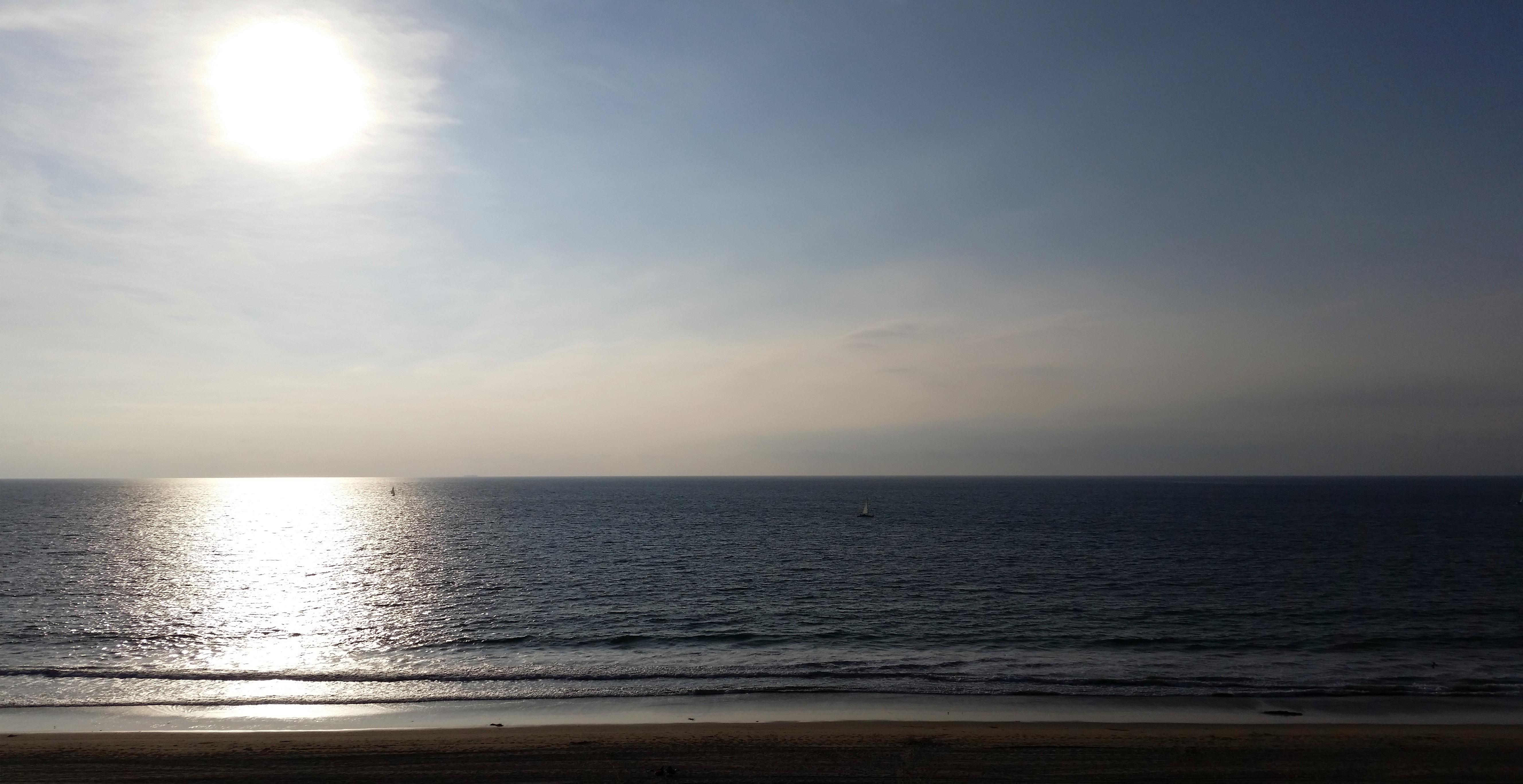
Sunset picture of RAT beach…..“Right After Torrance” Beach and “Redondo and Torrance” Beach, is located on southern Santa Monica Bay in Torrance, between Redondo Beach and Palos Verdes Estates, in Los Angeles County, California
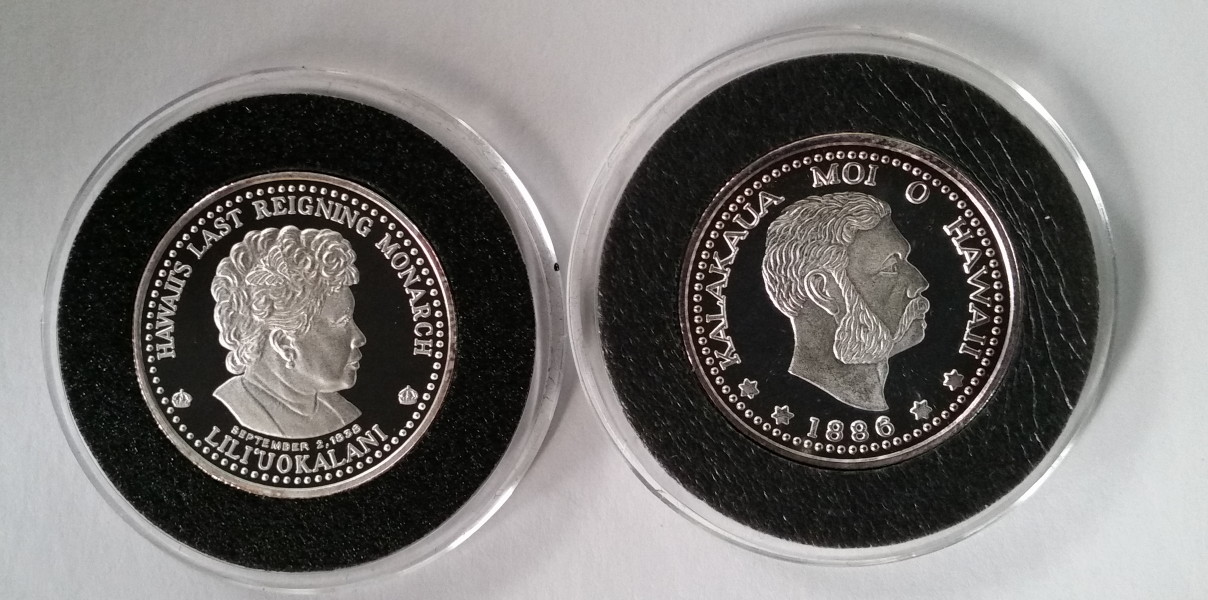
These are fairly unknown silver issues struck by The Honolulu Mint.
My previous blog about the gold version (with images) of:
Queen Liliuokalani design. http://wp.me/p3eNTe-wk
King Kalakaua design: http://wp.me/p3eNTe-wu
The style of both coins differ slightly.
On the obverse: English vs Hawaiian. Date vs year only.
On the reverse: Placement of words ‘IOLANI PALACE. Change in fonts. Size and detail of the palace.

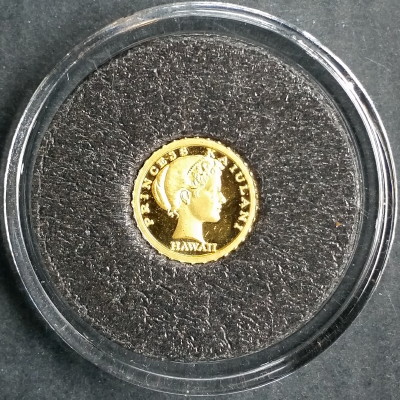
After examining this 10 mm coin I can say that it is not issued from the Royal Hawaiian Mint (no RHM hallmark). However, the Princess portrait and dolphin designs are similar to those struck by the RHM. There is no rim damage to indicate it was a ex-jewelry piece.
This coin has the triangle circle B hallmarks (design by Bernard von NotHaus) on the reverse. The B is within a circle and within a triangle.
Under 60X magnification, it can bee seen that the B within a circle and within a triangle is present.
The presence of two triangle circle B hallmarks seems odd.
Upon closer examination it was determine that the right hallmark has an incuse circle and B. While the left has a relief (raised) circle and B.
This maybe a prototype (pattern) coin stuck by Bernard von NotHaus or by a mint he was associated with (after his time at the RHM).


Right hallmark with incuse B within a circle

Left hallmark with raised B within a circle
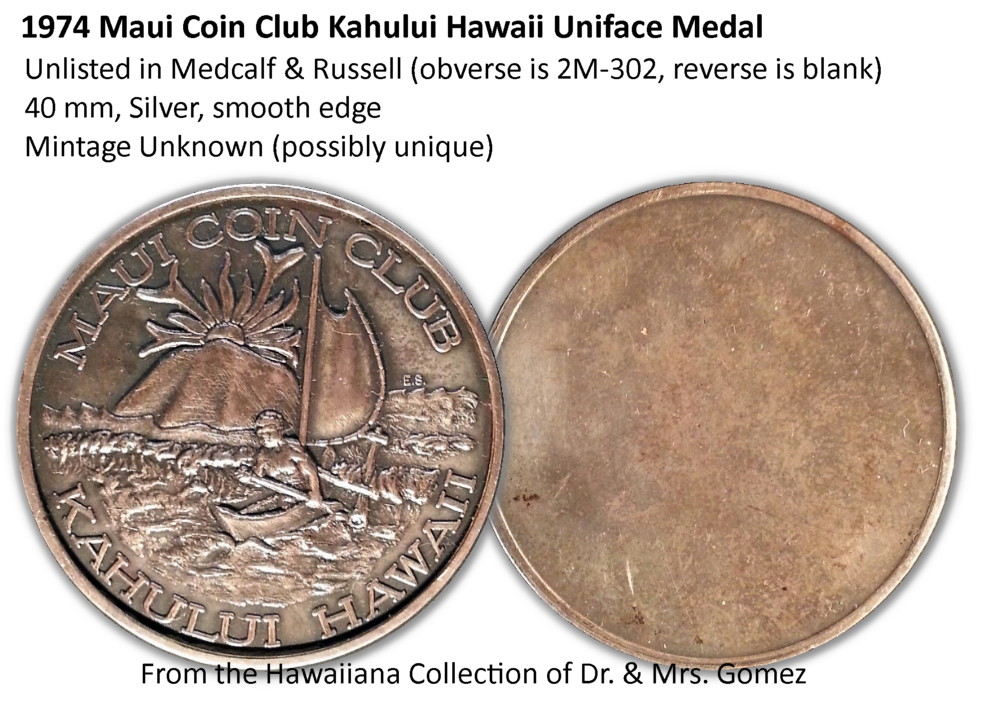
I’m still working on improving my photo composition skill set
The seller of these coins obtained his/her profit by breaking up a 1994 Royal Hawaiian 4 coin proof gold and silver set. Seems like it’s a trend to break up the Royal Hawaiian Mint gold sets and sell the items individually. From a buyer perspective it seems affordable, but in reality it’s expensive. Just look for a nice intact set.
Cost for these three gold coins ( no silver) was $630.95

Last year, I purchased a serialized 1994 Princess Kaiulani Dala. Unbeknownst to me, the seller sent the original empty 1994 Royal Hawaiian Mint 4 coin holder to me.
Mintage 100

Obverse planchet flaws at 5 and 6 o’clock positions.
My maternal grandparents worked on the `Ola`a Sugar Company plantation and my paternal grandparents worked on the Hutchinson Sugar Plantation. Both are located on the Big Island of Hawai’i. My parents met at a carnival in between these two plantations and a courtship ensued. After my dad returned from serving in the US Army they got married. This resulted in a large family of seven children. We lived on the Big Island, Oahu, and an atoll in Northern Pacific Ocean named Wake Island (dad worked fro the federal government). My parents finally settled in the city of Waipahu. I had a great childhood growing up near a working sugar plantation. Growing up in the early years of Hawaii statehood, the ways of my parents were pushed aside. My maternal side of the family is from Northern Philippine (Ilocanos) and my paternal side of the family is from the Visayan Islands. Since these two Filipino subcultures don’t mix well, the seven of us were raised as Americans. In reality, I am third generation Filipino-American raised in the Hawaiian culture. I know more about the Hawaiian culture than the Filipino culture.
The Bango Tags collectibles is a direct path to the days of my grandparents. One of my other hobbies is genealogy research. My grandfather first arrived in Hawaii in 1919. I located the Hawaiian Sugar Planters’ Association (HSPA) records providing the exact date of arrival. Three years later my grandmother arrived in Hawaii with their eldest child. I located the ship’s manifest with the three names. I located the 1930’s census records showing my grandparents and dad. I located the entire family in the 1940 census. I located the US draft registration of my maternal and paternal grandfathers for US military service. So far I can only go back two generations prior to my paternal grandfather (born in 1893). I’ve located the Roman Catholic Church records of the City in which my grandfather was raised. I had my dad (still alive) DNA tested and his DNA trail follows the human migration “Out of African path” to Asia. I’ve added to my personal library all the major books about the “Sugar Trains” in Hawaii (most were used on plantations). This genealogy research is on going.
As for the Bango Tags, its provides a glimpse of the plantation life my grandparents endured on the plantation. Here are some interesting books and articles.
Book: Hawaii Plantation Pay System & History http://www.memoriesofhawaiibigisland.com/id4.html
Article (with images of `Ola`a Sugar Company bango tags) http://www.hawaiimagazine.com/blogs/hawaii_today/2014/10/16/Cane_Haul_Hawaii_Plantation_Museum_Sugar_Hilo
Picture of bango tags (last picture) http://pohukainacave.blogspot.com/2013/03/waipahu.html
Lastly, I found an image on the Oahu Sugar Plantation (in Waipahu) where I grew up. We (the neighborhood children) would hike and explore these ancient Hawaiian petroglyphs. http://mikekrzywonski.photoshelter.com/gallery/Waipahu-Oahu/G0000_G3YmMsjyeY/C0000tbxNXzFHn_0 It has been identified that this is the Pohaku-Pili. A legendary stone and ahupuaa marker for Waikele and Hoaeae.
 The Hawaiiana Numismatist ™
You must be logged in to post a comment.