Hawaiian Royal Orders By Gordon Medcalf

I picked up this book a few weeks ago. A very good book.

Expands on the derails in Hawaiian Money Standard Catalog Second Edition. Most likely it was the source for the two M&R guidebooks.

This book also identifies the recipients (aids in provenance traceability).

r


What is the first State of Hawaii Item Produced by the U.S. Mint?

Not the Kingdom of Hawaii silver coins (dollar, half-dollar, quarter, dime, nor 12-1/2 cents)!

Not the Territory of Hawaii Hawaiian Sesquicentennial half dollar!

Not the Hawaii Statehood quarter!

It’s Gomez DDE-08 (M&R 2M-94) struck in 1960 as being the first U.S. Mint product with the State of Hawaii as a design element. It took just 10 months after becoming the 50th State. (Alaska originally was to have a POTUS appreciation medal, but it was cancelled.

The image below is part of my collection of POTUS Appreciation medals (I have four more medals not in the picture).

Other facts based on my ongoing POTUS appreciation medal research.

  • Majority of the POTUS medals were officially first issued outside the U.S. in a foreign country. This is a significant find as US Mint products are normally issued domestically first, however these medals were first issued internationally
  • Department of State is normally given credit for issuing the POTUS appreciation medals (which is totally incorrect)
  • Other information is still confidential as an update to the current book is in progress 

ddeset


State of Preservation: Franklin Mint Issues (silver medal in postal covers)

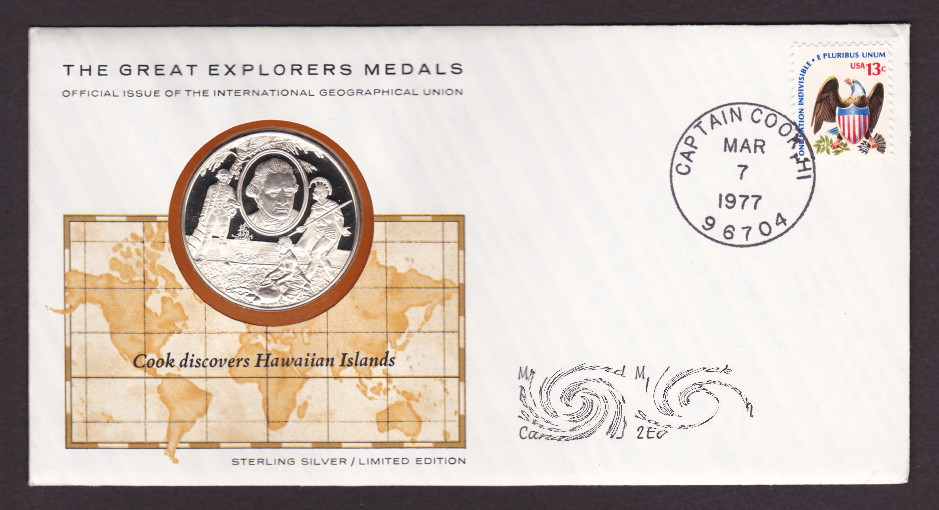
Many of the Franklin Mint issues have been mishandled by so-called dealers. One example is the medals encased in postal covers. These dealers (and collectors) focus on the medal and discard the postal cover. When this happens the degradation time-clock starts:

  1. The medal becomes unknown to non-specialist. Many key identification information from the COA is lost forever (set it came from, year issued, metal content, etc…).
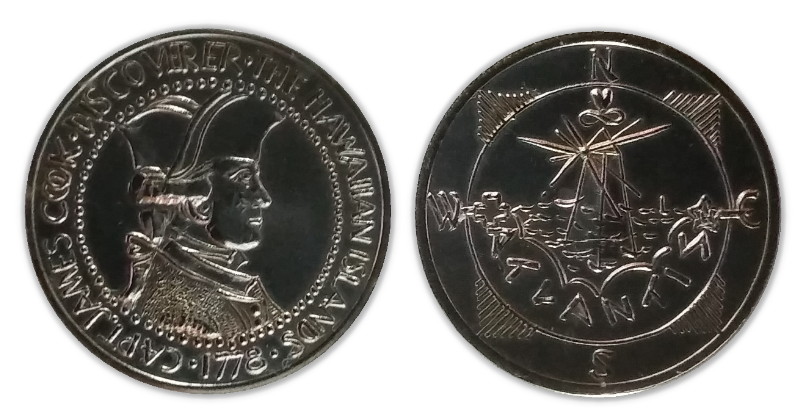
  2. Environmental exposure begins to the medal’s surface. For an example, the Captain Cook medal was issued in 1977 and 38 years have now elapsed.
  3. Risk of mishandling begins to the medal’s surface. Again, using the Captain Cook example, I would prefer to own the original encapsulated medal rather than a loose piece.

One of the things I’ve been determining is a attrition rate formula to determine the “acceptable collectible supply” for the Franklin Mint issues.

For silver medals postal cover scenarios an example after 38 years after issue:

  • 20% smelting loss.
  • 20% mishandling loss.
  • 50% Remain intact in complete set by Franklin Mint collectors.

In this example only 10% of the mintage intact in original postal cover will be available to Hawaiian collectors.

Using this percentage “example formula”, the Captain Cook medal mintage of 2216 FMR-E03 results with only 221 specimens to Hawaiiana collectors. Again, this is just my theory to determine availability for Hawaiiana collectors.

The topic of determining price for the Captain Cook medal is subjective. Most use the M&R guidebook (which is now 24 years old). Then there is the lack of information (mintage and source set)) in the M&R guidebook. So how did M&R set the price?

In this Captain Cook example, its listed as 2M-79 with no mintage or source set identified. The source set somewhat helps to identify the demand for the individual medal based on the Franklin Mint collector’s demand for the set. The Great Explorer Medals was sold world-wide (not only in the US) making it also hard to locate.

The 10% mintage population rule seems to work for me in collecting intact specimens in original Franklin Mint packaging.

When was the last time you saw a 2M-79 Mint in Package for sale?

cc

IMG_0002a IMG_0003a

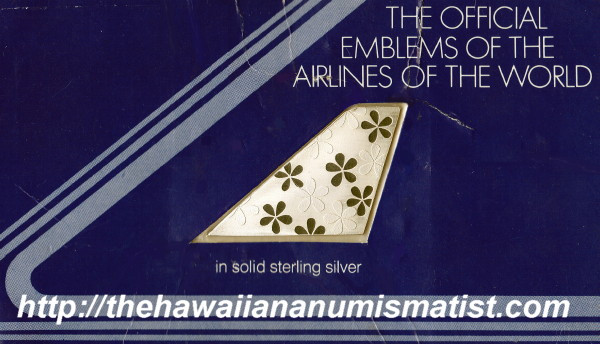
The Aloha Airlines Silver Tail Ingot FMI-A01

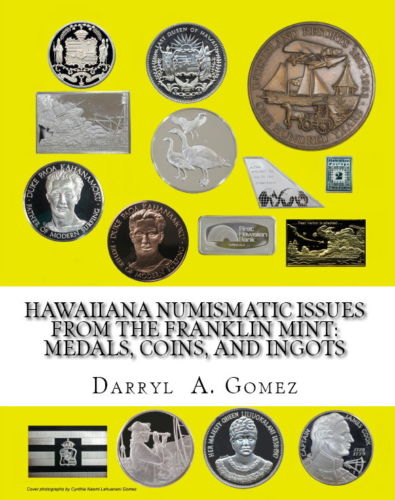
Listed as FMI-A01 in my  just released book Hawaiian Numismatic Issues from the Franklin Mint: Medals, Coins and Ingots. 

This Aloha Airlines sterling silver ingot has a mintage of 1,777 (mintage is deceiving as Franklin Mint collectors do not breakup sets). If you locate a FMI-A01  today, its a remnant from a broken up completed set.

Hint: The choicest specimens are those in original Franklin Mint packaging.  The proper collector term is Mint in Package (MIP).

Hint: The original Franklin Mint paperwork is also desired and extremely hard to come by since most specimens are a remnant from a broken up completed set.

Hint: Aloha Airlines went out of business in 2008 making this highly sought after by airline and Aloha Airlines memorabilia collectors.

Here is a MIP FMI-A01 with its original Franklin Mint paperwork and magazine ad.

airline


fm1 fm2 fm3

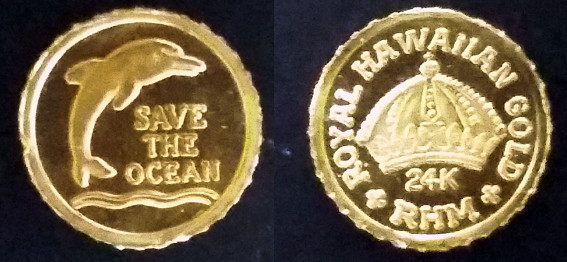
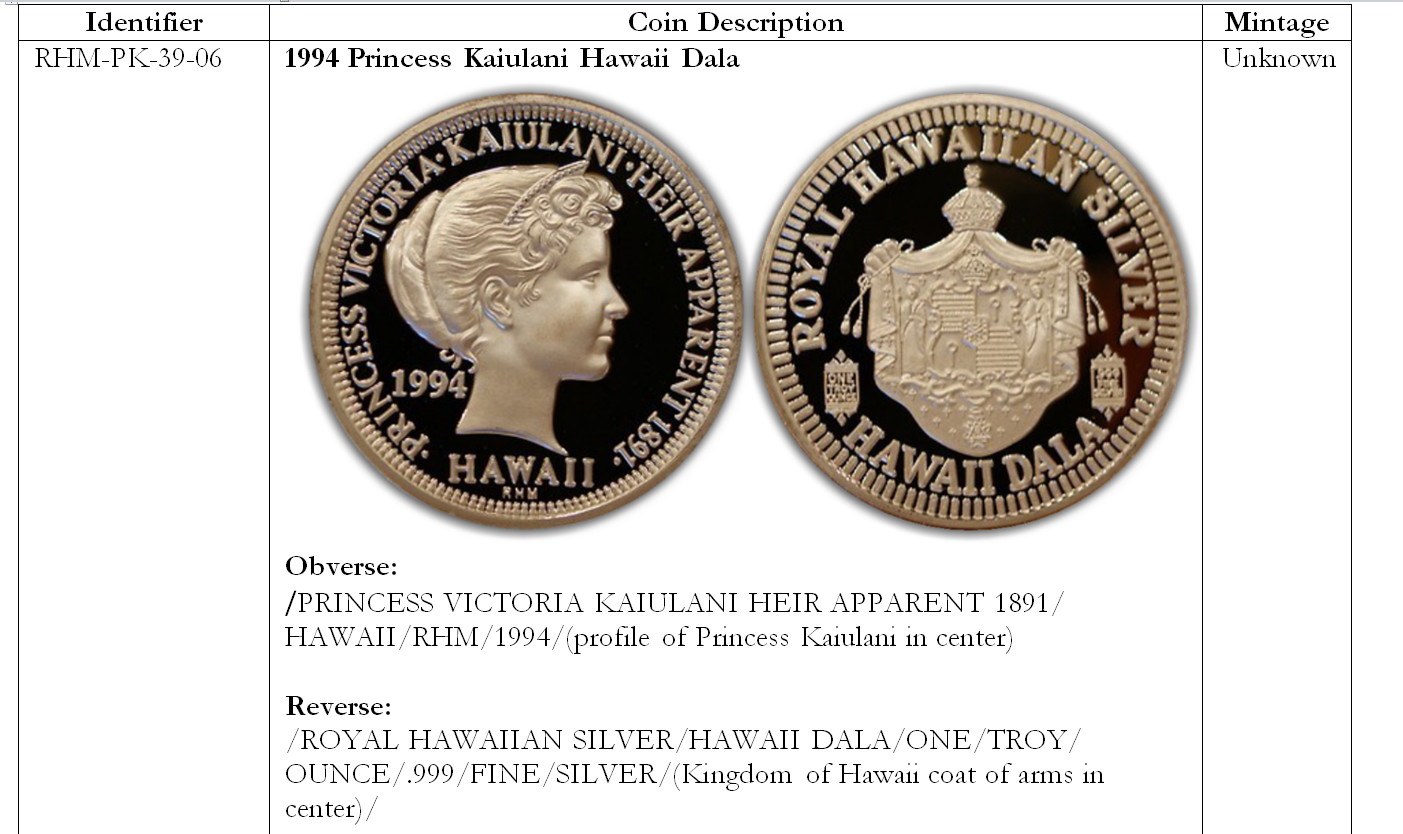
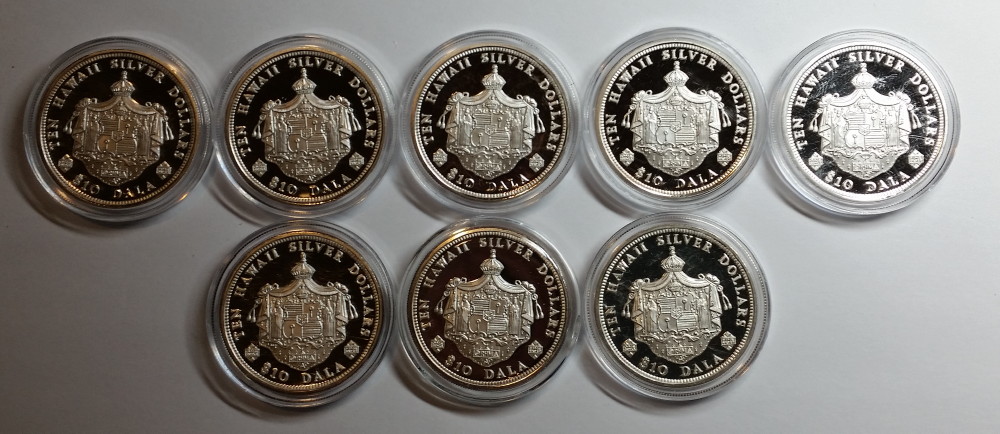
Eight $10 Dala Coins

Only 30 coins were struck for each of the six designs.

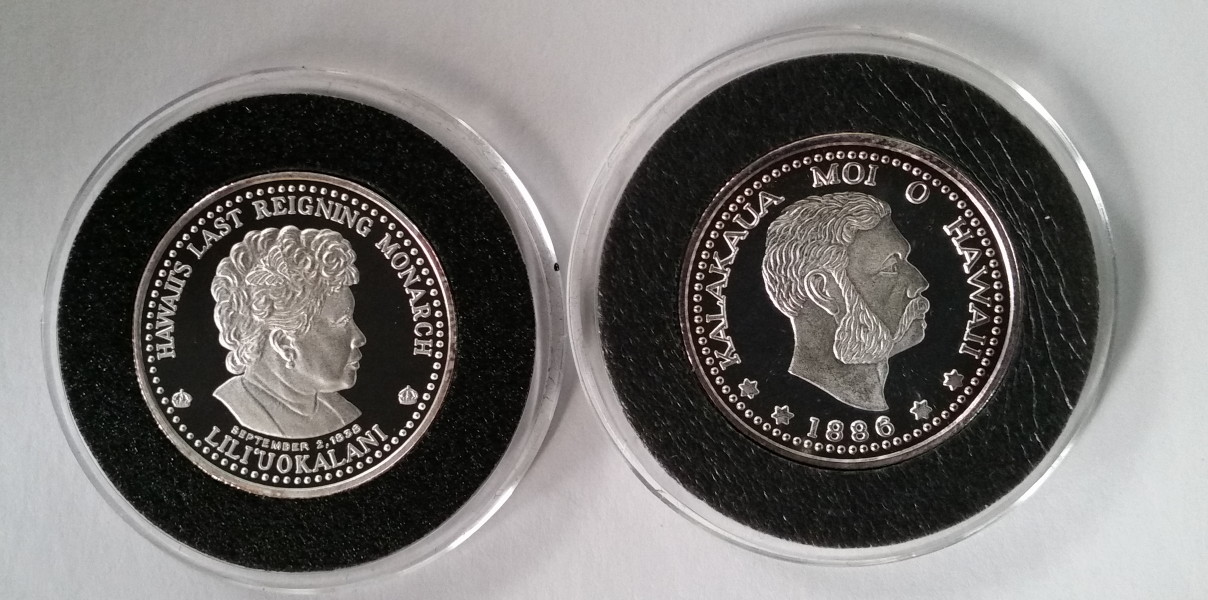
Here is my hoard (not included is my Princess Kaiulani) of eight (obverse design not shown on purpose).

hoard

Here are the Krause Publication listings (with my correction):

(has Kalakaua image, should be Kaiulani image)

http://www.ngccoin.com/price-guide/world/hawaii-10-dala-x-mb150-1994-2004–cuid-140046-duid-343814

(has Liliuokalani image, should be Bust of Kamehameha holding spear image)

http://www.ngccoin.com/price-guide/world/hawaii-10-dala-x-mb151-%282004%29-cuid-140047-duid-343815

(has King Kamehameha Sovereign image, should be Liliuokalani image)

http://www.ngccoin.com/price-guide/world/hawaii-10-dala-x-mb152-1996%282004%29-cuid-140048-duid-343816

(has Kaiulani, should be Kalakaua image)

http://www.ngccoin.com/price-guide/world/hawaii-10-dala-x-mb153-1996%282004%29-cuid-140049-duid-343817

(has Bust of Kamehameha holding spear image, should be King Kamehameha Sovereign  image)

http://www.ngccoin.com/price-guide/world/hawaii-10-dala-x-mb154-2004–cuid-140050-duid-343818

This is correct image with description

http://www.ngccoin.com/price-guide/world/hawaii-10-dala-x-mb155-%282004%29-cuid-140051-duid-343820