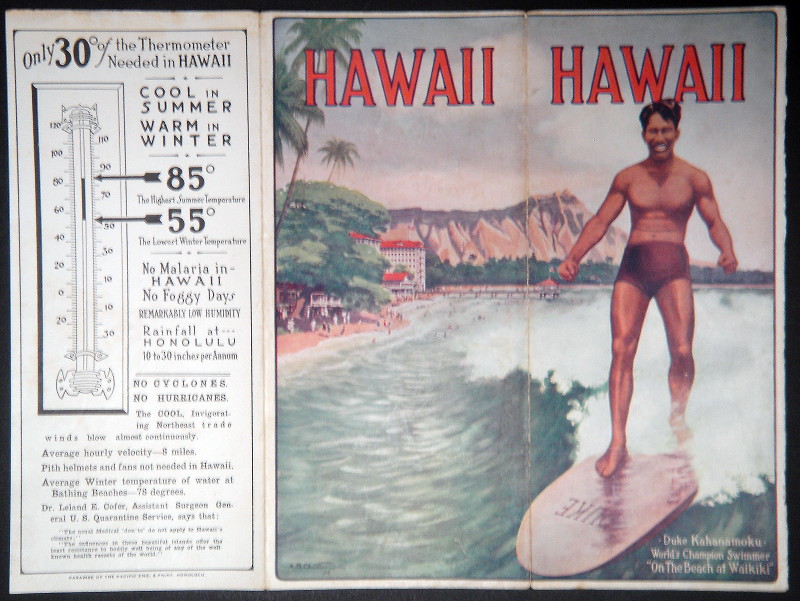
Item in my Hawaiiana ephemera collection, a rare and original 1918 Hawaii Promotion Committee tri-fold flyer with the father of modern surfing. Duke’s stance is similar to 2M-329.
Item in my Hawaiiana ephemera collection, a rare and original 1918 Hawaii Promotion Committee tri-fold flyer with the father of modern surfing. Duke’s stance is similar to 2M-329.
I applaud the community outreach effort s by the Mauna Kea Astronomy Outreach Committee with their numismatic coin contests in 2011, 2012 and 2013.
Here are the winning designs
The aluminum version were provided to the children (a dealer has listed one on eBay).
You can purchase the bronze 2011 and 2012 versions at the
I knew it was to good to be true when I found a bullion dealer listing for Royal Hawaiian Mint gold/silver sets listed at $119.42.
I did place an order on a so called “protected” credit card account monitored for unauthorized transactions and with a low credit limit.
After 20 days, no action by the dealer. A call to the customer service did not help.
The company has not bothered to correct the webpage. Shame on the company for false listing and being incompetent in managing their internet operations
.
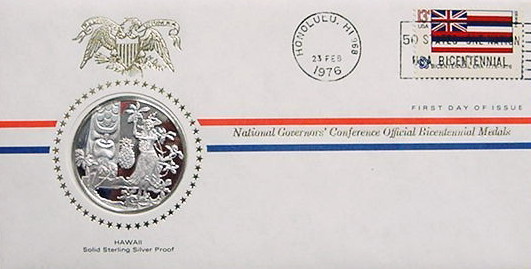
Listed in M&R as 2M-337. Also identified as THN-FM-NGC-01 with a mintage of 6,977.
Once again, in order to obtain this specimen a Franklin Mint complete set of the National Governors’ Conference Statehood must be dispersed.
Cachet/franking indicates “bicentennial” as the 50 state cachets were issued from 1974 through 1978 to commemorate the 200 anniversary of the US.
Surfed the web. Found this bargain a few days ago. Made the purchase a few minutes ago. This is a non-eBay store. Bargain basement price of $28.27.
Coin is X# MB83, 100th Anniversary of Overthrow (a Royal Hawaiian Mint product). Catalog value of $65. I may resale it on eBay, since this is a duplicate in my collection.

I really hate to see fellow collectors being taken advantage of at a well known auction site (i.e. ebay). You can see the high prices being set by dealers for Royal Hawaiian Mint coins. Are the dealers really gouging the unsuspecting collector? Check out the prices/mintages and come to your own conclusions….
In that light here are a few references that Hawaiiana collectors should be aware of….
(1) This is the Royal Hawaiian Mint database (no prices but mintage figures and description can help you determine the rarity)
http://www.royalhawaiianmint.com/database.htm
(2) This is a book that covers some of the years missing from the Royal Hawaiian Mint database. Has prices and mintage for the key Royal Hawaiian Mint coins. Unusual World Coins by George S. Cuhaj, starting on page 297…
(3) For the Royal Hawaiian Mint gold coin collector. World Gold Coins by George S. Cuhaj, starting on page 725 …
(4) For NGC information of the Royal Hawaiian Mint google ngc x# mb125 (where the x# mb125 is the catalog number in item number (2) or (3) above. NGC actually uses the numismaster.com database (item 5 below).
Here is an example for the x# mb125
http://www.ngccoin.com/poplookup/WorldCoinPrices.aspx?category=140043&worldcoinid=343809
(5) The Numismaster.com provides the information to NGC (sign up for free to get access)
http://secure.numismaster.com/ta/inside_numis2.jsp?page=PriceGuideInfoDenom
Lastly, to straighten out the misinformation (by sellers) of the NORFED issues. Item 2’s book. Look on page 685 for the designated NORFED issues (in addition to page 312 bottom right).
Good luck on your Royal Hawaiian Mint search.
Here are excerpts from my draft book, volume 1. Click each to enlarge….

Excerpt 2 from the draft book…This is a good example of the error in the M&R book.
There are 5 medals ( THN-FM-HUS-06 thru THN-FM-HUS-10) for the 1941 Japanese Attack Pearl Harbor medals series (as compared to one mentioned in the M&R as 2M-211). The mintage looks high, but you have to consider that the mint figures are for sets. These sets must be broken up to obtain the desired specimen.
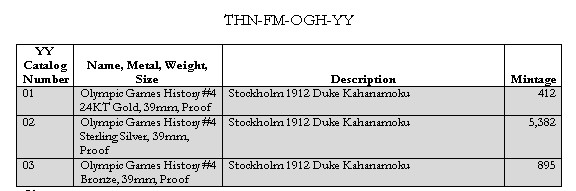
Another example with the M&R book, 2M-162 (39mm Bronze). M&R indicates a mintage of 1,303. True mintage is 155. M&R reverse a few mintage figures. Below is the true mintages.
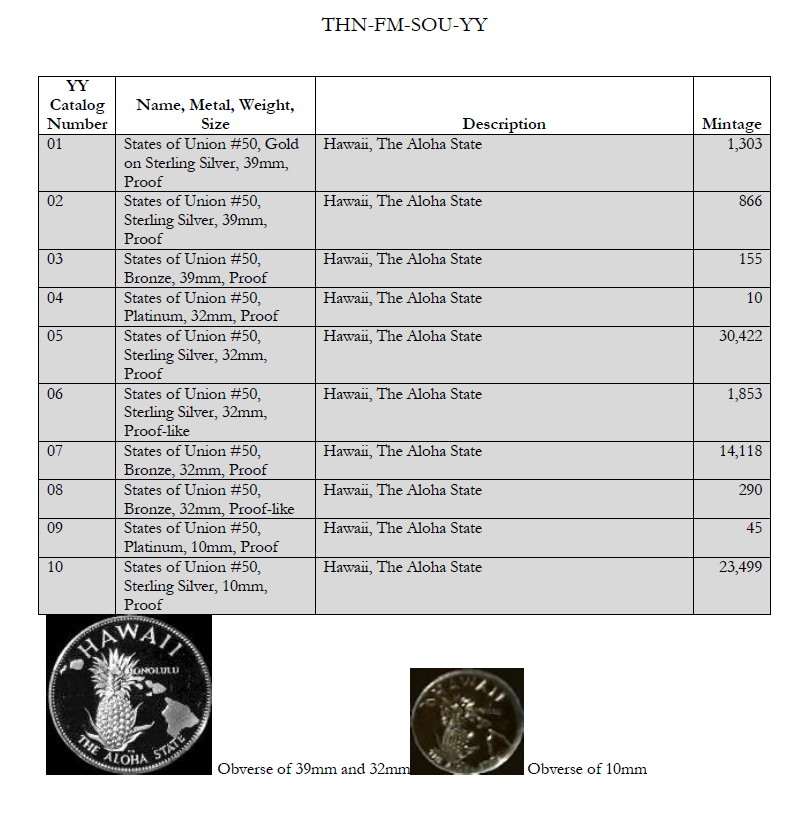
Excerpt 3 from the draft book
As further proof, here is link that will verify the mintages (I used a book for my mintages that matches this webpage)
http://www.franklin-mint-silver.com/franklin-mint-states-of-the-union-medals.htm
Below is a Governor’s Edition Bronze that I cannibalised for the 39 mm Hawaii Bronze. Imagine that. Only 155 sets made and who in their right mind would break the set? I still need to sell the other 49 medals from this set (it has a really nice wooden display case).
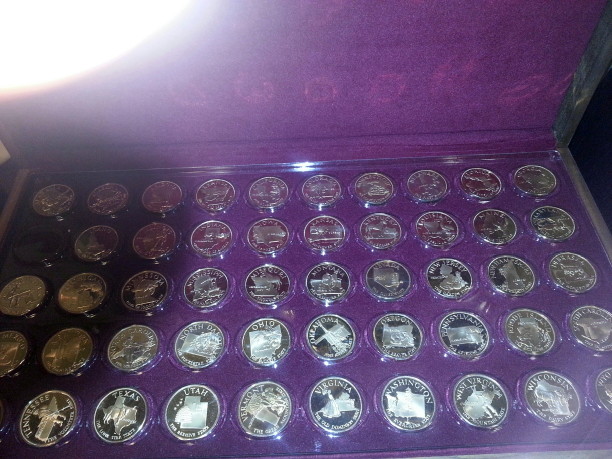

24 KT on Sterling Silver, Sterling Silver, and Bronze
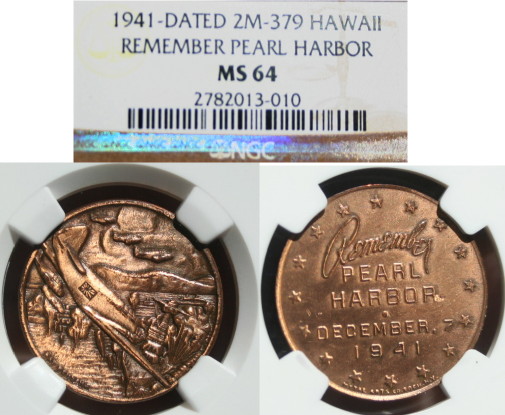
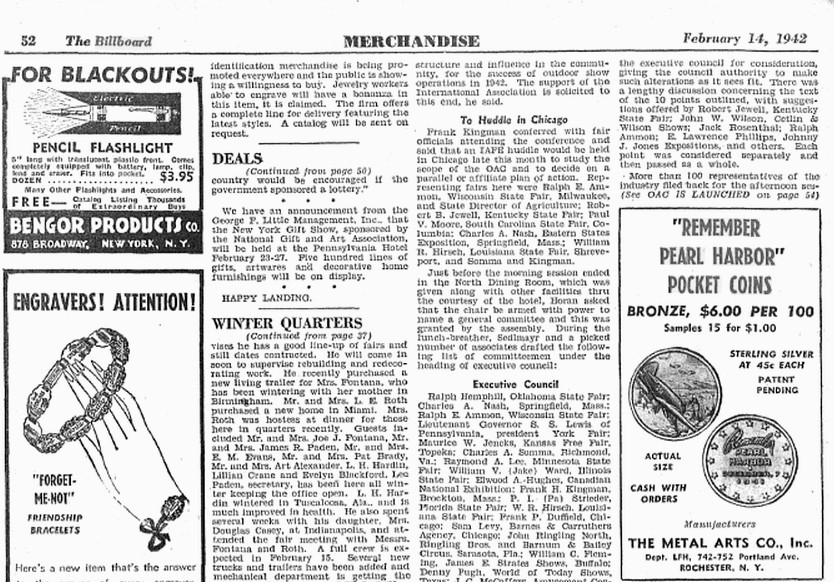
I still like the fact that this is the first numismatic item to depict the Empire of Japan’s attack on Pearl Harbor and the coins were struck and made available 69 days after the tragic event.
Previous research I completed for my 1941 – dated Pearl Harbor medal set can be read at http://coins.www.collectors-society.com/wcm/CoinCustomSetView.aspx?s=12054
High grade specimen in my collection…
Ad that dates the coin’s availability 69 days after the attack.
Why my interest in Pearl Harbor coins, medals, and or tokens? While in high school I would look out the class window during and see the US Navy ships leave and enter. My high school was next to Pearl Harbor.
Here is my research:
The big question is why was a 10mm gold coin struck?
Here lies the answer:
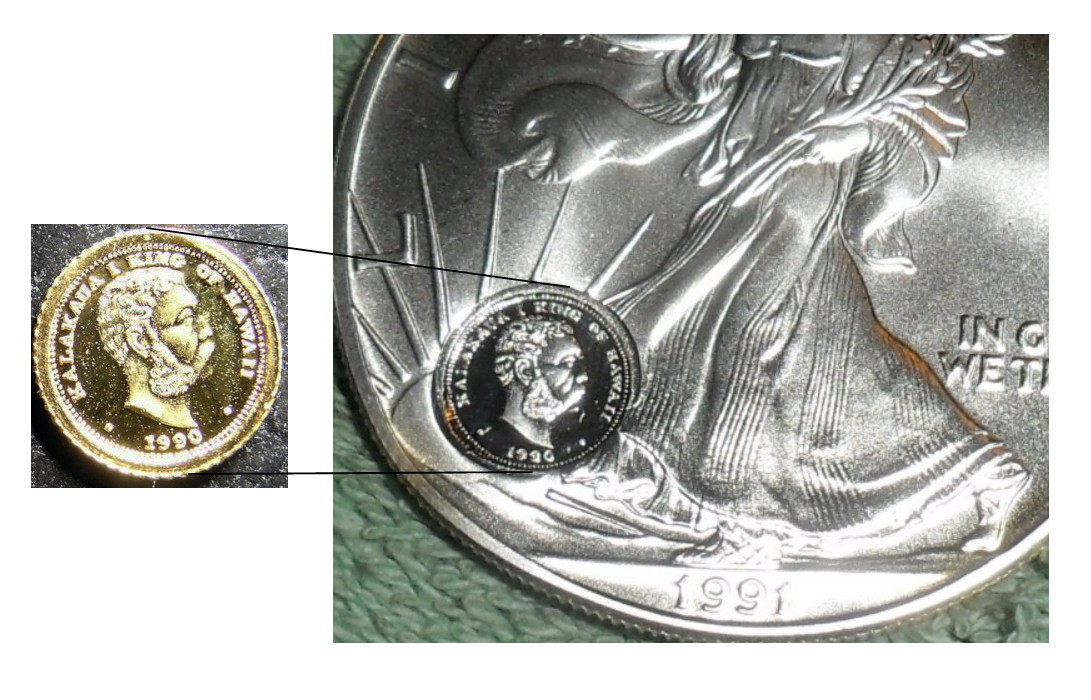

Here is a listing of the RHM dies that were used as counter-stamps. The bolded entries are coins using the original die(s).
1. 1991 Pearl Harbor Dala 10 mm dies (24 – 10 mm gold coins):
2. 1981 Liliokalani IKI 13 mm dies (55 – 13 mm gold coins):
3. 1989 King Kalakaua 13 mm dies (100 – 13 mm 1989 Kalakaua HSNA gold coins)
4. 1990 Liliokalani 13 mm Obverse die/ Grand Opening 6-9-90 13 mm reverse die (Combined – None)
(Obverse die only was used on 25 – 1990 Liliuokalani HSNA Gold 13mm)
5. 1990 Liliokalani 13 mm Obverse die/ First Day Issue 3-9-91 13 mm reverse die (Combine – None)
(Obverse die only was used on 25 – 1990 Liliuokalani HSNA Gold 13mm)
6. Aloha Money 10 mm dies (None):
Images of the counter-stamp coins can bee seen at this link
In summary, the 1991 Pearl Harbor Dala 10 mm dies are the most elusive as a coin and as a counter-stamp.
I previously wrote about this at a numismatic social media website…
In M&R page 100: “About 30 sets for display purposes in bronze were issued showing the five step production from blank to final stage.”
To clarify this sentence:
There are actually 6 bronze medals in this “Hawaii Official Statehood medal progression set”. The medals of this set is housed in a display plaque. The 6 medals are:
Medal 1: Blank
Medal 2: First Strike of die onto planchet (no collar is used in high relief striking). Medal details is coarse and lacks the fine details. NII HAU error is present. Medal is bright bronze and untrimmed (extra metal beyond the rim). Medal is NOT uniface.
Medal 3: Second Strike of die onto coarse medal. Metal flow extends outward beyond the medal’s rim. Details are becoming stronger. NII HAU error is present. Medal is bright bronze and untrimmed . Medal is NOT uniface.
Medal 4: Third Strike of die onto the medal. Medal flow extends outward and high relief detail are bold. NII HAU error is present. Medal is bright bronze and untrimmed. Medal is NOT uniface.
Medal 5: Completed Medal with Obverse displayed. Antique oxidation performed previously (to highlight the high relief design elements). NIIHAU error is not present.
Medal 6: Completed Medal with Reverse displayed. Antique oxidation performed previously (to highlight the high relief design elements).
I do not dare to open the plaque I have in my collection at this time. In all, there are 6 new un-cataloged medals (I’m working on a catalog numbering scheme for these medals.
First Strike
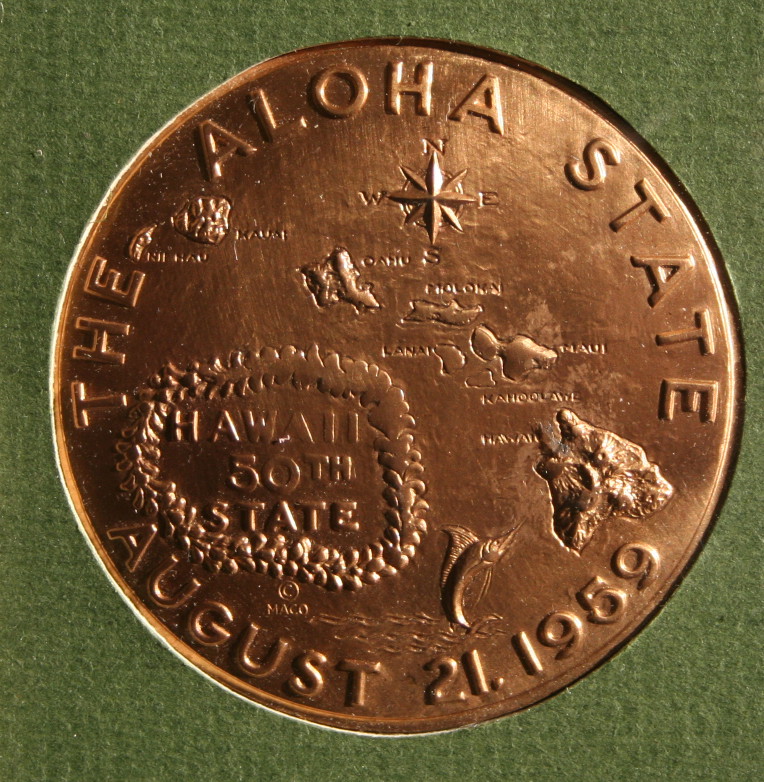
Third Strike (image taken from a set that was up for auction with a major auction house).

Complete set
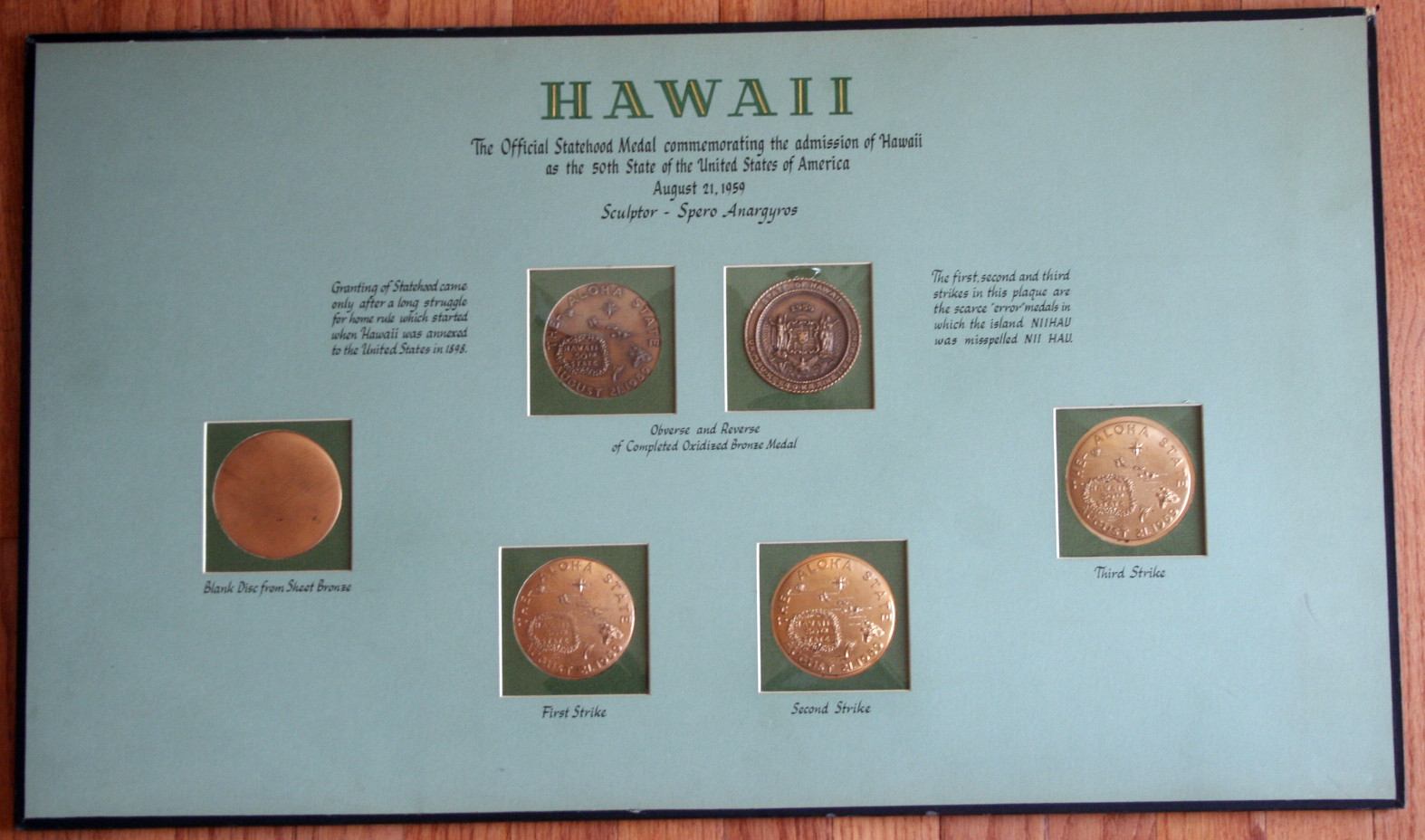
The plaque is thin (5/16 inch). The quality is impeccable and the workmanship outstanding. It is also made of layered archivable materials.
I believe this plaque was used to promote the sales of the medal. Why?
I also have the matching Alaska Official Statehood progression set with 9 medals. The differences is the inclusion of the coloring steps, added a trimmed medal, and the removal of the 3rd strike. I have not seen another Alaska set as this one. The set is duplicated in workmanship and quality.

I have concluded that both sets were treated as place cards and placed on display stands at trade shows or show rooms to promote the Alaska and Hawaii Official Statehood medals .

 The Hawaiiana Numismatist ™
You must be logged in to post a comment.